Homeowners insurance is one of those products most people never think about until something goes wrong — and then they discover their assumptions were incorrect. Understanding what your policy actually covers before disaster strikes is not just good financial hygiene; it can mean the difference between a manageable claim and a financially devastating gap in coverage. This guide explains the standard policy structure and the most common exclusions that trip homeowners up.
The Six Coverage Types in a Standard Policy
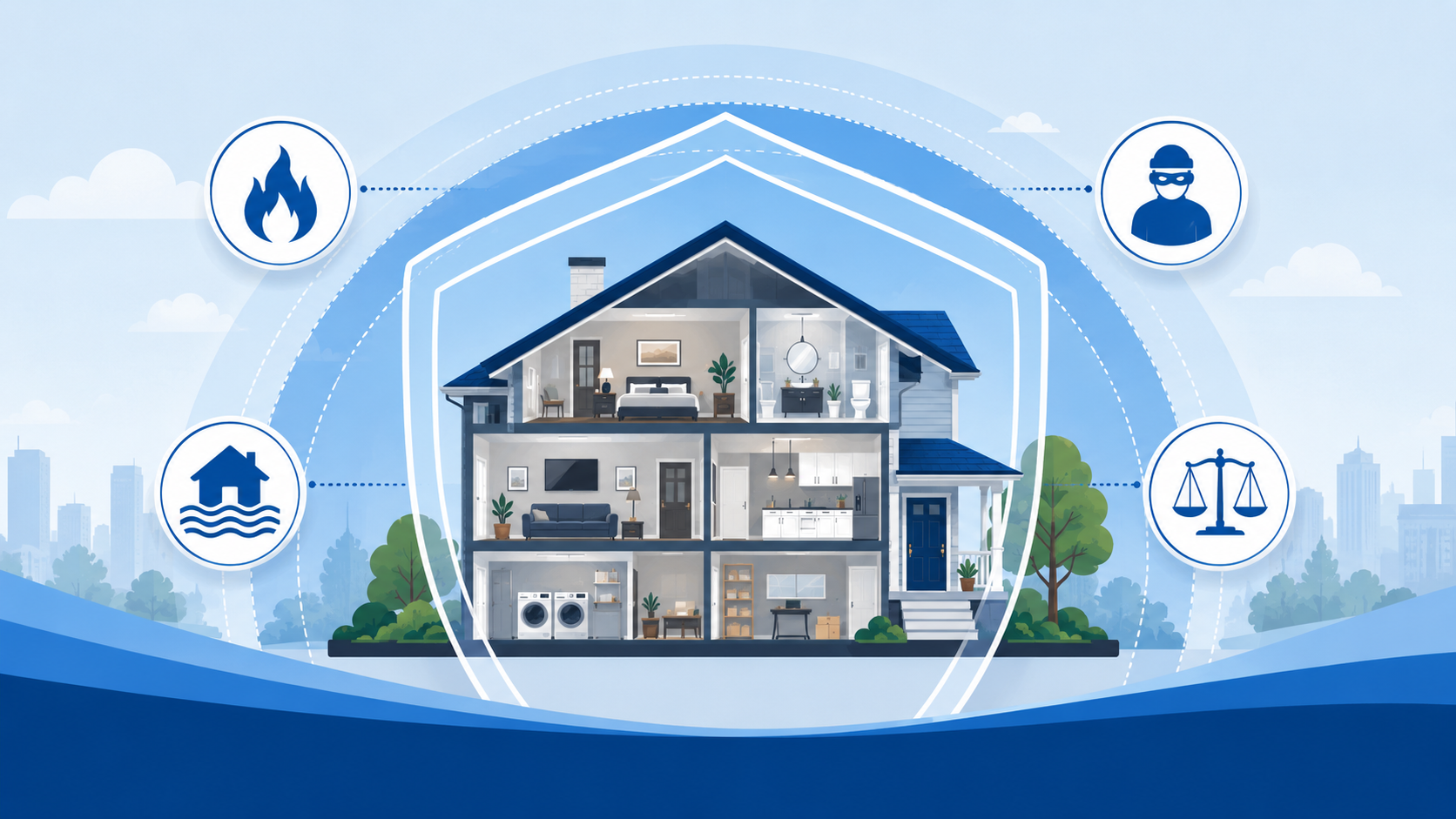
A standard HO-3 policy — the most common type — includes six coverage sections: dwelling coverage for the physical structure, other structures coverage for detached garages and fences, personal property coverage for belongings, loss of use coverage for temporary living expenses if the home is uninhabitable, personal liability coverage if someone is injured on your property, and medical payments coverage for minor injuries to guests.
What Is and Isn't Covered: The Key Perils
Standard policies cover most 'sudden and accidental' perils including fire, lightning, windstorm, hail, theft, vandalism, falling objects, and water damage from burst pipes. What they typically do not cover is equally important: flooding, earthquakes, normal wear and tear, pest infestations, foundation settling, and damage from lack of maintenance.
The Flood Insurance Gap
This surprises many homeowners: standard policies do not cover flood damage from external sources — heavy rain, storm surge, or overflowing bodies of water. Flood insurance must be purchased separately through the National Flood Insurance Program (NFIP) or private carriers. If your home is in a flood zone and has a mortgage, flood insurance is legally required. But even homes outside designated flood zones experience significant flood losses.
Earthquake Coverage
Earthquake damage is also excluded from standard policies in all 50 states. If you live in a seismically active region — California, the Pacific Northwest, or along the New Madrid Seismic Zone — a separate earthquake rider or standalone policy is strongly advisable. Earthquake insurance typically covers the structure and personal property but carries significant deductibles, often 10–15% of the dwelling value.
Actual Cash Value vs. Replacement Cost Coverage
This distinction has major financial consequences. Actual cash value (ACV) coverage pays you what your belongings are worth today — after depreciation. A five-year-old laptop covered at ACV might yield $200 for something that costs $1,200 to replace. Replacement cost coverage pays what it actually costs to replace the item new. The premium difference is modest; the claims difference can be enormous.
Coverage Limits and High-Value Items
Standard policies cap coverage for specific categories of personal property. Jewelry is often limited to $1,500; art, collectibles, and silverware carry similar caps. Items that exceed these limits require scheduled personal property endorsements — separate coverage riders that insure specific items at their appraised value. If you own valuable jewelry, instruments, or art, schedule them individually.
Home Business Exclusions
If you run a business from home — even a small freelance operation — your standard homeowners policy likely excludes business equipment and liability arising from business activities. A home business rider or a separate business owner's policy (BOP) fills this gap. With remote work increasingly common, this is an overlooked exposure for a growing number of homeowners.
How to File a Claim Successfully
Document everything before a loss occurs: photograph and video all rooms and significant items, keep receipts and appraisals, and store copies offsite or in the cloud. After a loss, notify your insurer promptly, mitigate further damage (cover a broken window, for example), document all damage before cleanup, and keep records of all related expenses. Avoid signing any releases until you've reviewed the settlement offer carefully.
Shopping for the Right Policy
Coverage amounts, deductibles, and endorsements vary significantly between insurers. Get quotes from multiple carriers and compare them line by line, not just by premium. Ask specifically about replacement cost vs. ACV, guaranteed replacement cost options, sewer backup coverage, and the carrier's claims satisfaction ratings. The cheapest policy is not always the best policy — especially when you actually need to use it.