Launching an online store has never been more accessible. Modern e-commerce platforms remove most of the technical barriers that previously required developer expertise, and global fulfillment infrastructure has opened worldwide markets to solo entrepreneurs. But accessible doesn't mean easy — and many new stores fail to gain traction because they skip critical steps. This guide walks you through everything, from concept to your first sale.
Step 1: Validate Your Product or Niche
Before investing time and money building a store, validate that people actually want what you plan to sell. Research demand using Google Trends, keyword search volume, and competitor analysis. Look at Amazon and Etsy bestseller lists in your category. Talk to potential customers. The goal is evidence of demand, not just enthusiasm for your idea. Many successful stores start with a single validated product rather than a full catalog.
Step 2: Choose Your Business Model
Common e-commerce models include: dropshipping (selling products you don't physically hold), print-on-demand (custom products printed when ordered), wholesale (buying inventory at bulk prices and reselling), manufacturing or sourcing unique products, and digital products. Each has different capital requirements, margins, fulfillment complexity, and scalability. Choose the model that fits your resources and risk tolerance.
Step 3: Select Your Platform
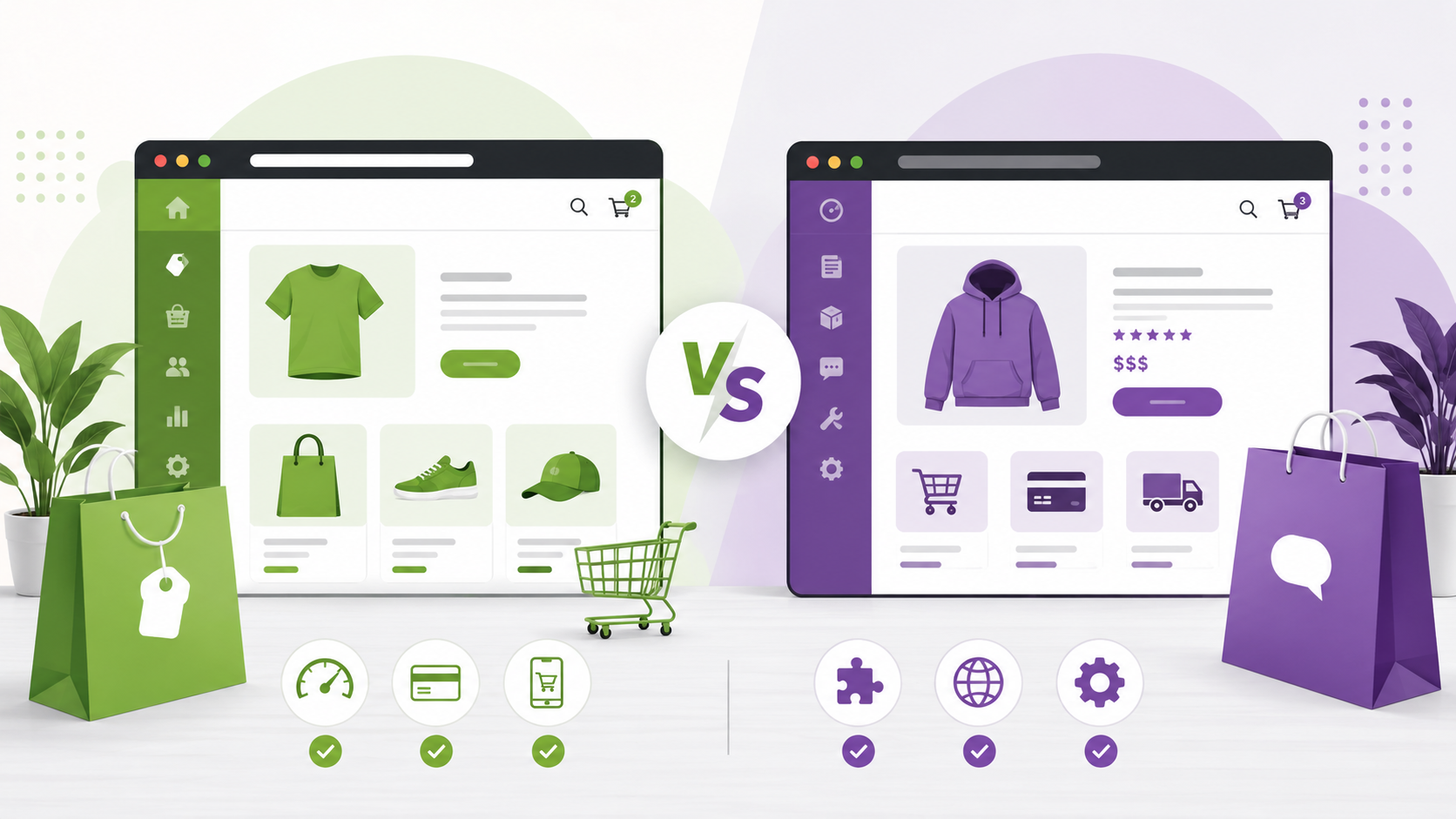
For most first-time store owners, Shopify is the fastest path to launch — it handles hosting, security, and payments with minimal technical overhead. WooCommerce (on WordPress) is a strong alternative for those with existing WordPress experience or who want maximum flexibility. BigCommerce, Squarespace Commerce, and Wix eCommerce are worth considering for specific use cases. Don't over-research this decision — you can migrate later if needed.
Step 4: Set Up Your Domain and Branding
Choose a domain name that is short, memorable, easy to spell, and ideally includes a relevant keyword. Register it through your hosting provider or a domain registrar. Before designing your store, develop basic brand elements: a name, logo, color palette, and brand voice. Consistent, professional branding builds trust immediately and differentiates you from amateur-looking competitors.
Step 5: Source or Create Your Products
If dropshipping, connect with suppliers via AliExpress, CJ Dropshipping, or vetted directories. For physical inventory, attend trade shows, contact manufacturers directly, or use platforms like Alibaba for overseas sourcing. Order samples before committing to a supplier. For digital products, create them yourself or license content. Quality control at this stage prevents customer service headaches later.
Step 6: Build Your Product Pages
Great product pages are the difference between browsing and buying. Each page needs: a compelling, keyword-rich title; a detailed, benefit-focused description that addresses likely objections; multiple high-quality images from different angles; clear pricing; stock availability; shipping information; and prominent calls to action. Don't copy manufacturer descriptions — write original content that speaks to your customer.
Step 7: Configure Payment and Shipping
Enable multiple payment methods from day one: credit/debit cards, PayPal, and Apple Pay/Google Pay are table stakes. Configure shipping rates accurately — either real-time carrier rates, flat-rate shipping, or free shipping with the cost built into product prices. Free shipping thresholds (e.g., free shipping on orders over $50) are proven tactics for increasing average order values.
Step 8: Implement Essential Apps and Tools
Prioritize: Google Analytics for traffic tracking, an email marketing platform (Klaviyo, Mailchimp), a reviews app (Stamped, Yotpo, or Judge.me), a cart abandonment recovery tool, and basic SEO optimization. Avoid adding dozens of apps at launch — each adds complexity and potential load time. Add tools as specific needs arise and their ROI becomes clear.
Step 9: Drive Your First Traffic
Organic traffic takes time to build. For your first sales, use paid traffic (Facebook/Instagram or Google Shopping ads), leverage your personal network and social channels, engage relevant communities and forums, list products on marketplaces like Etsy or Amazon for additional exposure, or reach out to micro-influencers in your niche for initial reviews and promotion. Diversify your acquisition channels from the start.
Step 10: Learn, Iterate, and Scale
Your first store launch is a hypothesis test. Review analytics weekly, talk to early customers, read every review, and make data-driven improvements. What are your best-performing products? Which traffic sources convert? Where do customers drop out of the funnel? Success in e-commerce is rarely instant — it's built through cycles of testing, learning, and improving. The stores that win are those that treat every data point as a learning opportunity.